“Our shadow is the person we would rather not be.” —CG Jung
The shadow isn’t a popular topic. Who enjoys owning their flaws, weaknesses, selfishness, nastiness, envy and hate? Focusing on our strengths is more enjoyable. It feels more life-affirming.
However, trouble arises when we fail to see it. And you can be sure, it is standing right behind us. The problem is that the shadow can operate independently without us knowing what’s happening. Remaining unconscious of the shadow means its power goes unchecked; hurting us and our personal and professional relationships.
“We don’t see things as they are, we see them as we are.” —Anais Nin
One experience stands out for me, really bringing home my shadow work. I remember being triggered by someone who entered my space for support and became enamoured with me and my work— to the extent of trying to recreate herself as me in ways that I found sycophantic and, honestly, downright creepy. When Sheba said, “I want to learn from you so that I can become the wind beneath your wings,” I struggled with what superficially may have seemed helpful and even admiring. Yet, deep within me, I felt deep anger. I could not understand why I was so angry. My inner dialogue asked why she did not figure out her own journey, and find her own ‘thing’. I wanted others to be themselves rather than copy me. At a conscious level, I also felt completely ungenerous and unkind. I felt like a diva — as if I was so special that I did not want anyone else to do what I did. These thoughts and feelings took up so much space that I ended up sharing them with several close friends, hoping to gain some new insights or perhaps validate my well-constructed story of why I felt the way I did.
Eventually, with help, I could unravel what was going on. It was not the request itself that had elicited my reaction. Instead, there were qualities in Sheba that triggered strong emotions in me. This made me realise that when someone affects you that strongly, they represent part of your shadow.
Debbie Ford’s work on shadow processing really helped me to understand this. She notes that our shadow, which is formed much earlier, contains all the parts of ourselves that we try to hide or deny, the parts we believe are not acceptable to our family, friends, and most importantly, ourselves. One’s shadow represents everything that annoys, horrifies or disgusts us about other people or ourselves. It holds all that we try to hide from those we love and don’t want other people to know about us.
To work with the shadow, we must first acknowledge that it exists. Noticing the wounded shadow makes the unconscious conscious, allowing the voices we strive to suppress to speak, even when they say things like, “I have trouble with the way I eat”; “I have a hard time loving myself because of my upbringing”; “I am anxious every time I have to go to work”; or “I dislike someone because of their gender, race, class, education, or mannerisms”. We all have shadow aspects — and our shadows can disempower us, making us capable of causing harm or preventing us from bringing our full selves to the world. Yet, our shadows are also powerful beings. They are protectors and catalysts of change. Our shadows represent the hungriest, most hidden parts of ourselves that we often try to banish.
If I can love someone’s shadow, if someone can love my shadow, then each of us is capable of loving and being loved.
Sheba represented my shadow. The qualities that disturbed me were her neediness and deep sense of vulnerability; qualities that I struggle with. I realised that these qualities reminded me of my mother. I realised how when I was younger I saw my mother’s ‘perceived’ neediness and vulnerability as weakness. When her marriage fell apart, and even until the end of her life, my mother wanted to relinquish control over her life to others to sort out. As a young woman, I felt that she gave away her power. Subconsciously and even consciously I rejected those qualities in myself. So it was no surprise that my shadow came knocking on my door in the way it did.
When the penny dropped, it felt strange to acknowledge my own vulnerability and neediness. While I have increasingly stepped into my power in ways that I had not before, I remained unbalanced because I had not integrated all the parts of myself. Ironically, denying the parts of me that are fearful, doubtful, insecure and in need of love and support, left me weak and vulnerable.
The process of embracing my shadow led me to uncover the gifts and receive the wisdom hidden within every aspect of myself, particularly the parts that I am ashamed of or embarrassed by. Rather than viewing my weakness, smallness, insecurities or rage as enemies or obstacles, working with my shadow continues to guide me to embrace my so-called defects as the powerful teachers they are. Acknowledging my vulnerability and neediness means embracing aspects of myself that I had previously repressed. As I embrace them I learn to ask for what I need, rather than viewing these parts of myself as wrong.
Systemic origins of the shadow
“Our racist and colonial shadows that have been passed down through generations of colonial and colonised bodies…” —Bernie Siegel
We may regard our shadow as a creation of our subconscious. However, our subconscious thoughts, beliefs and behaviours did not emerge from nowhere. They are often shaped by external influences and reflect our responses to what we’ve been conditioned to believe about ourselves.
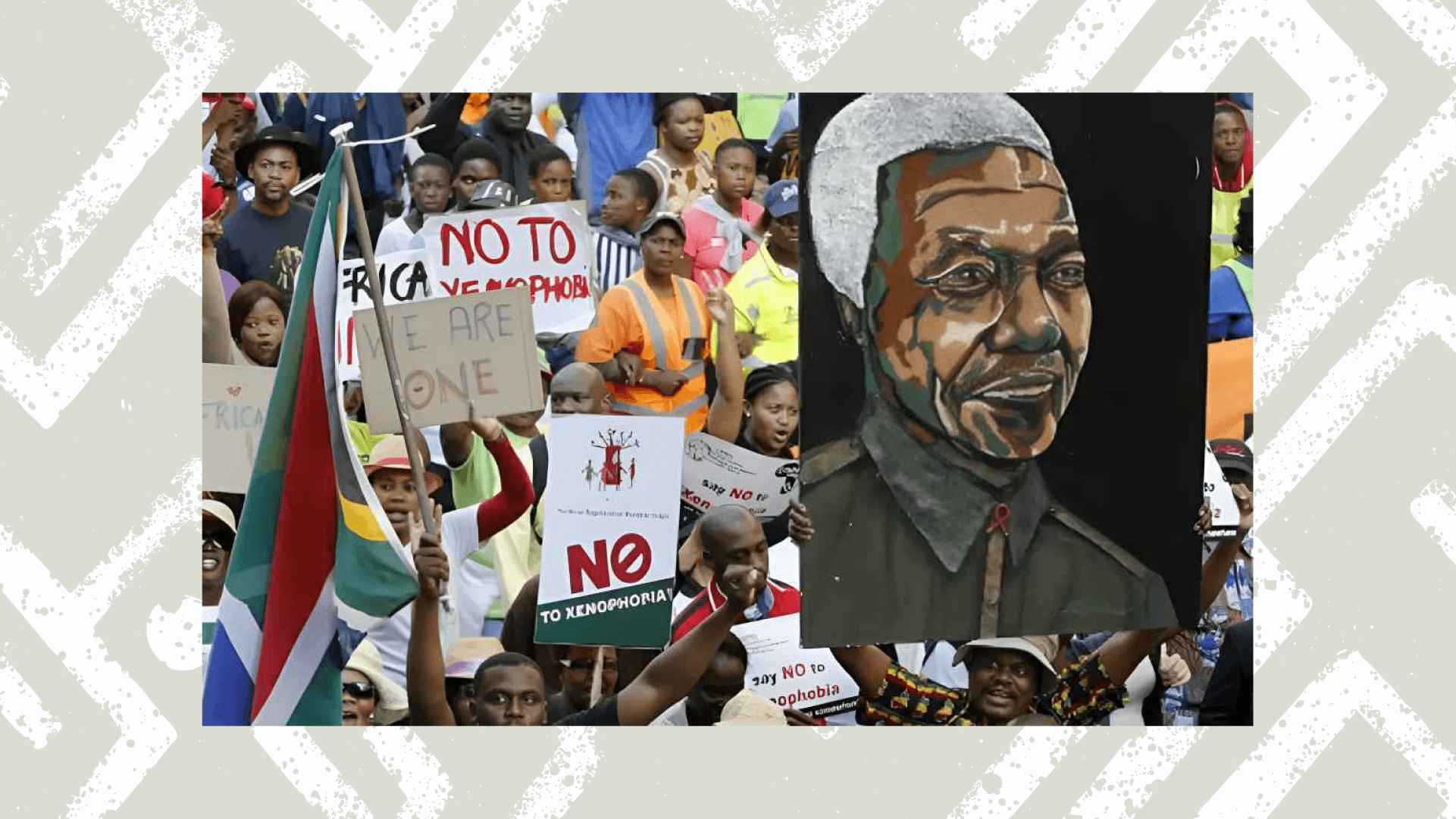
Looking at the shadow through a social justice lens enables us to see the dynamics of privilege and the abuses of power that lead to many of our shadow characteristics. This requires that we be willing to examine what is repressed, unconscious, (e.g., internalised oppression, traumatic experiences, or the projection that privileged identities placed on us) as part of our shadow work. Understanding collective shadows represented by patriarchy, systemic racism, white supremacy, cancel culture, etc., is essential for deep, long-lasting internal and external change.
According to Michal Osterweil, white supremacy culture is a phenomenon grounded in separation, scarcity, domination, objectification and extraction; a worldview that aims to create a classificatory schema for the world in which there is essentially only one right way to be. In a world where different ‘isms’ (capitalism, neoliberalism, racism, etc.) proliferate, it is important to understand the discourses that perpetuate separation and violence, and how they operate. If we want to do the real shadow work, we have to acknowledge the shadow of colonialism and racism and how it may have affected us. This work is deeply uncomfortable and may make us feel unsafe too — because we may encounter the wounds and the history we have avoided for so long. Recognising racism and colonial history is jarring for all of us. We must be willing to beart his discomfort. The more time we spend with our racist and colonial shadow and its wounds, the more we may learn about ourselves.
Growing up, I believed that speaking in the vernacular was “less than”. Even though it was the language I felt most comfortable using, and in which I communicated with my parents and members of my family, at times I rejected it. I felt that if I used this language I would be categorised in ways that I avoided. Even though this was the language I spoke when I felt things most deeply, I continued to judge myself and worked hard to assimilate and speak ‘proper’ English. It was only as I started writing more and more, that I learned to embrace this ‘voice’, and, instead of hiding it, began to celebrate it and use it to make visible an inherent conditioning that I had previously been uncritical of.
Bringing shadow work to systemic work holds the potential to heal divisions and help us create more conscious and humble systems, rooted in humility, accountability, empathy, kindness and compassion. Carl Jung famously said, “Every light casts a shadow.” In other words, every positive or idealised story about the systems and communities we operate in has a corresponding negative or dark flipside. Unacknowledged unconscious material means that, as people and collectives, we are not experiencing ourselves as a whole.
Shadow work is the path of the heart warrior.
Shadow work helps us reclaim every aspect of ourselves and discover how each can serve us and others. Embracing our shadows is, therefore, the ultimate act of self-love. There is no greater love than one that allows us to shine a light on the aspects of ourselves that we had judged and considered “wrong”. When we look at our lives from the perspective that we have been given everything we need to fulfil our hearts’ desires, we often realise that the greatest of these gifts lies hidden in our shadow. For example, if we look for the gift of our weakness, we may find that it has given us strength or allowed us to be supported by others. The gift of our fear might be our determination or our ability to set good boundaries. The gift of an upsetting situation could lead us to read a life-changing book. The gifts of our pain are here for us to receive.
But first, we must be willing to identify our shadows. It is when we love our shadow selves, that they can offer love in return.
Shadow work is not about perfection; it’s about integration. In my integration process, I realised that my vulnerability keeps me alive to what I feel, which is not a weakness but a unique place of authentic, personal power. In the process, I learned to love myself (and others) as I learned more and more about who I truly am. I admit this is not an easy process, but in acknowledging my shadow and seeing it for what it is, I have already claimed back my power. I continue to witness my vulnerability and weakness emerging, yet I am proud that I can take on each challenge and get to a new level of mastery. By embracing parts of myself I had previously avoided, I can create greater balance within myself. I am learning to receive more, to request more support, and to allow others to do for me. This is a giant leap. As a result, I am allowing greater connections with people who long for a space to love me in a way they know how. I am grateful that my vulnerability and weakness have created space for this.
Debbie Ford points out that embracing our dark side gives us the freedom to be with the darkness in others. When we can love all we are, we will love all of the other. In this way, shadow work takes us to a new place, where we can open our hearts to all of ourselves and humanity. Now when I consider my mother, by changing my lens I recognise that my mother viewed herself as a goddess in her world — truly believing that everything would be taken care of. Interestingly, she allowed this to unfold instead of making it happen.
“The thing that is really hard, and really amazing, is giving up on being perfect and beginning the work of becoming yourself.” —Anna Quindlen
Four steps to turn towards your shadow
If you want to radically reinvent yourself, you must turn toward the aspects of yourself that you fear or are ashamed of. Only when we dare to face ourselves exactly as we are, without any self-deception or illusion, can we give ourselves everything we desire and deserve.
Step1: Identify an aspect of your shadow
The shadow is elusive; it hides behind us. All of us have defence mechanisms designed to keep our shadows repressed and out of view. Confronting them takes effort and regular practice. The more you pay attention to your behaviour and attitudes, the more chance you have of catching your shadow in the act.
One of the best ways to identify your shadow is to pay attention to your emotional reactions toward other people. Some people might be aggressive, arrogant, inconsiderate or impatient. But unless you have the same qualities, you’re unlikely to react so strongly to their behaviour or elements of their personalities.
Whatever bothers you in another is likely a disowned part of yourself. Get to know that part, accept it, make it a part of you and you may find it stops evoking a strong emotional charge when you observe it in another.
So, in Step 1, think of somebody you know (partner, friend, relative, boss) and choose something about them that irritates you. (It’s probably already top-of-mind.) Perhaps you perceive one of your friends as lazy, arrogant, envious or stupid.
Step 2: Recognise that attribute or behaviour within yourself
Remember that what’s in one of us is in all of us. We might not express every behavioural attribute all the time, but every quality — the good, the bad, and the ugly — is in all of us, waiting for the right conditions to trigger it.
The next step is to bring that quality you see in another (from Step 1) back into yourself.
For example, let’s say you judge a friend for being lazy. You feel they sit around all day, don’t want to work, disregard their physical health, and so on.
Was there a time in your life when you were lazy? Perhaps things weren’t going your way, and you started to lose hope or give up. If not, go back further into childhood. Were you proactive then? Or did you want to sit on the couch and watch TV whenever you could?
Laziness resides in all of us. We all have a part who wants to do nothing, who only wants to experience fleeting pleasures.
Someone else’s laziness wouldn’t bother you unless you’re repressing your own laziness. Once you see the laziness within, you’ll have less frustration with your friend, and you might even allow yourself to be ‘lazy’ and rest or just be when you need to.
Step 3: Engage in inner dialogue
Inner work requires an active dialogue with various parts of ourselves.
This might seem a bit scary since many of us believe that only “crazy people” talk to themselves. The reality is, however, that we all have many subpersonalities, the numerous unrecognised, autonomous parts of our minds.
The parts within that we don’t know are often aspects of our shadow. When we don’t pay attention to these parts, they have a way of influencing our behaviour. Our disowned parts aren’t trying to hurt us, but when we ignore or deny them, they often do.
By engaging these parts in our imagination or through journalling, we can integrate them into our conscious mind. That way they become our allies instead of our enemies.
So, talk to that part of yourself that you acknowledged in Step 2. For example, get to know that lazy part. See what it wants from you, what it likes, and how it feels about how you live your life.
Ask it a few key questions:
- Who are you?
- What’s important to you?
- What do you want from me?
- What are you trying to show me?
Be patient and open to what this part of you has to say.
Step 4: Bring the disowned quality back into you
Finally, allow yourself to become the quality or attribute you previously disowned. In the case of laziness, see yourself as a person who’s sometimes lazy.
Remember, no single quality defines you. The error we make by repressing our shadow is that we deny that many of these qualities exist within us. That’s why we project them onto others, get irritated, and judge them.
As in Step 3, owning a “darker” part of yourself may feel uncomfortable as you’re acknowledging something inconsistent with your self-identity. Because of that, your ego will naturally resist it.
You can make statements to yourself or say them out loud. For example:
- I am lazy.
- I am arrogant.
- I am stupid.
- I am jealous.
- I am dull.
- I am clever.
- I am witty.
The last two examples are positive attributes as the shadow can also reveal positive repressed qualities we project onto others.
Experience the part of yourself that expresses these traits as fully as possible. Avoid making the process abstract or conceptual: just BE it. Now you can re-own and integrate this quality in yourself.