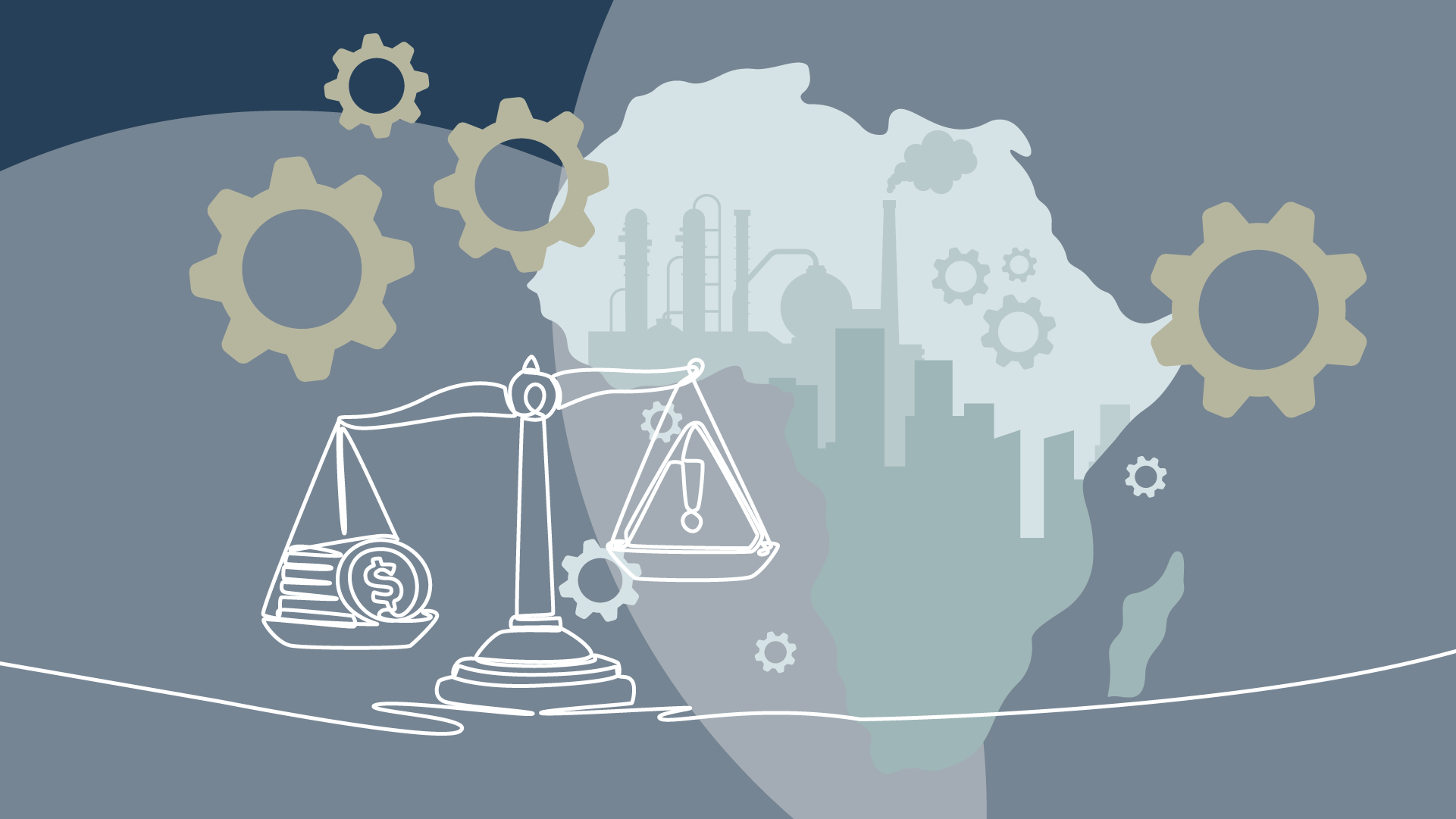
What does it mean for an economy to serve its people?
For decades, much of the Global North has treated billionaire wealth as evidence of progress. The more fortunes accumulate at the top, the more “successful” an economy is said to be. Yet behind those fortunes are often stagnant wages, unaffordable housing, precarious work, shrinking public services and political systems increasingly responsive to wealth rather than people.
China’s development model offers a sharply different proposition; one that deserves serious, critical attention from activists across the Global Majority.
China is now the world’s largest economy when measured by purchasing-power parity (PPP). The International Monetary Fund’s 2026 data places China’s share of global PPP-based output at approximately 19.89%, ahead of the United States. This does not mean that every Chinese citizen is prosperous, nor that China’s model is beyond criticism. It does, however, make it impossible to dismiss the country’s achievements as a developmental footnote.
The central question is not simply how large China’s economy has become. It is what the state has done with that economic power, and what it has refused to allow private wealth to do to the country.
Closing the wealth funnel
On 24 July 2026, China introduced new rules governing the taxation of offshore trusts. Under the rules, transferring shares, property or other assets into an offshore trust can trigger a 20% individual income-tax liability on the gain. Income generated by the trust and offshore entities it controls must also be reported and taxed annually.
The measures apply to Chinese tax residents and include a 90-day grace period for settling certain outstanding tax obligations dating from 2023 to 2025.
This is a significant attempt to close a loophole long used by wealthy families to protect assets offshore and defer taxation. It is also part of a broader campaign to scrutinise overseas wealth, capital outflows and offshore structures.
The policy amounts to a political statement: wealth accumulated through China’s economy cannot automatically be funnelled out of China and insulated from social responsibility.
Critics may reasonably ask whether such measures extend state control too far. That question matters. But another question matters just as much: why is the policing of billionaire wealth so often described as an attack on freedom, while the policing of workers, migrants and poor communities is presented as necessary economic discipline?
For feminist and social-justice movements, the issue is familiar. Wealth is never entirely private when it is accumulated through public infrastructure, public education, public labour and publicly created markets. When wealth is extracted from society, society has the right to demand accountability.
Prosperity by design
China describes its model as a socialist market economy, often referred to as “socialism with Chinese characteristics”. It is neither laissez-faire capitalism nor a conventional command economy. Markets are used to generate growth, competition and innovation, while the state retains decisive influence over finance, land, infrastructure, strategic industries and long-term planning.
This distinction is important. China did not simply “let the market work”. It put the market to work within a broader developmental project. Private businesses and foreign investment were permitted to expand, but the state continued to shape national priorities and retain control over sectors considered essential to sovereignty and public welfare.
The result has been a hybrid system in which market activity is subordinated, at least in official doctrine, to national development and the goal of common prosperity. China’s economic rise has therefore not been a straightforward victory of capitalism over socialism. It has been an attempt to use markets without surrendering the commanding direction of the state.
For countries across Africa, Asia, the Caribbean and Latin America, the relevant question may not be whether to embrace or reject markets. It may be: who governs the market, whose interests does it serve, and what institutions prevent it from becoming a machine for exporting wealth?
Extreme poverty and material progress
China’s most significant achievement is not the size of its stock market or the number of billionaires it has produced. It is the scale of its poverty reduction.
The World Bank estimates that almost 800 million people were lifted out of extreme monetary poverty in China between 1978 and 2020. It also records China’s official eradication of extreme poverty in 2020 under the country’s national poverty standard.
Chinese narratives sometimes refer to approximately 1.5 billion people whose living conditions have improved over the country’s modern development period. That broader figure should not be presented as equivalent to the World Bank’s internationally comparable estimate of people lifted from extreme poverty. China still faces inequality, youth unemployment, regional disparities, rural–urban divides and significant social pressures. The World Bank reports that 15.2% of China’s population remained below the higher poverty benchmark of $8.30 a day in 2021 purchasing-power terms in 2024.
Even with these shortcomings, China demonstrates that mass poverty is not an unavoidable condition of a large population. Poverty reduction can be pursued through coordinated public investment, infrastructure, education, employment, housing, health services and targeted interventions; not merely through the hope that wealth will eventually trickle down.
For the Global Majority, this is a crucial lesson. Development cannot be reduced to attracting foreign capital while abandoning the social conditions that make people’s lives liveable.
Engineers, not financial engineering
There is another revealing contrast between China and the United States: the relationship between economic ambition and productive capacity.
China produces millions of graduates in science, technology, engineering and mathematics every year. In 2024, the country was expected to produce approximately 11.8 million university graduates, while estimates of its annual STEM graduate output run into several million.
This is not an argument that engineers are inherently more valuable than teachers, carers, artists, farmers or community organisers. It is an argument about national priorities. China has invested heavily in technical education, manufacturing capability, industrial research and the physical systems needed to produce goods at scale.
The contrast is especially stark when placed beside economies increasingly driven by financialisation, speculative assets and what might be called paperless money: wealth multiplying through complex financial instruments without necessarily creating jobs, homes, food systems or public goods.
A society cannot digitise its way out of material reality. People still need affordable transport, reliable energy, hospitals, schools, food and dignified work. China’s development has been built around the production of tangible capacity. And this helps explain its strength in electric vehicles, renewable energy, batteries, high-speed rail, telecommunications and robotics.
Sovereignty in a technological age
China’s rise in humanoid robotics illustrates the connection between sovereignty, industrial policy and technological capacity.
Chinese companies accounted for more than 97% of global humanoid-robot shipments in the first half of 2026, according to industry data cited by Bloomberg. Chinese buyers also accounted for approximately 85% of global demand, creating a domestic market in which companies can test, improve and scale their products rapidly.
This illustrates that China has built an ecosystem in which manufacturing, supply chains, state planning, technical education and domestic demand reinforce one another.
This is what sovereignty looks like beyond flags and speeches. It means possessing the skills, infrastructure, finance and productive systems required to make decisions without being permanently dependent on external powers.
For countries across Africa, sovereignty must likewise mean more than political independence. It must include control over data, minerals, food systems, energy, digital infrastructure, public health and the terms of foreign investment.
A country that exports raw materials, imports finished goods and borrows to fund basic services may be formally independent while remaining economically constrained.
A model, not a blueprint
China’s progress should not be romanticised. Its governance system raises serious questions about political freedoms, surveillance, labour rights, minority rights, gender equality and the space available for dissent. People-centred development cannot be measured only in kilometres of railway, GDP figures or poverty statistics. It must also be measured in voice, dignity, safety and democratic participation.
But acknowledging those concerns should not require ignoring China’s successes, or accepting the false idea that the only alternative is the billionaire-led capitalism dominant in much of the West.
China’s experience offers a set of questions rather than a ready-made blueprint:
- Can economic growth be subordinated to long-term social goals?
- Can billionaires be prevented from converting private wealth into public power?
- Can markets be governed instead of worshipped?
- Can a state build technical capacity while protecting national sovereignty?
- Can poverty reduction be treated as a political responsibility rather than a charitable afterthought?
- Can development serve ordinary people before it serves investors?
These are urgent questions for feminist and social-justice movements in the Global Majority, where communities continue to bear the costs of extractive capitalism while investors claim the rewards.
China’s people-centred progress is unfinished and contested. But its most important lesson is already visible: an economy is not successful because it creates billionaires. It is successful when it expands people’s capacity to live, work, learn, create and shape their collective future.
And when the billionaire wealth funnel threatens that future, it can be narrowed, even shut down, through political will, taxation and state power.
References
- International Monetary Fund. “World Economic Outlook Database: GDP Based on Purchasing-Power-Parity Share of World.” April 2026. IMF DataMapper
- World Bank. “China: Overview and Development Data.” World Bank country page
- Alkire, Sabina et al. “Accurate Poverty Targeting in China.” Oxford Poverty and Human Development Initiative, 2025. OPHI briefing
- Reuters. “China Tax Crackdown Forces Wealthy Investors to Assess Their Offshore Trusts.” 19 August 2026. Reuters
- KPMG. “New Individual Income Tax Rules for Offshore Trusts.” 29 July 2026. KPMG China Tax Alert
- KPMG. “People’s Republic of China – New Individual Income Tax Rules for Offshore Trusts.” 18 August 2026. KPMG tax alert
- Yahoo Finance/Bloomberg. “China Humanoid Makers Hold 97% of Global Shipments, Report Says.” 10 August 2026. Yahoo Finance
- Forbes. “China’s Humanoid Robot Lead Is Misleading. Here’s Why.” 10 August 2026. Forbes
- China Daily. “105 Years of Commitment to China’s Development.” 30 June 2026. China Daily
- China Data Portal. “China Education Transformation.” 18 March 2026. China Data Portal