Photo credit: Carla Lever
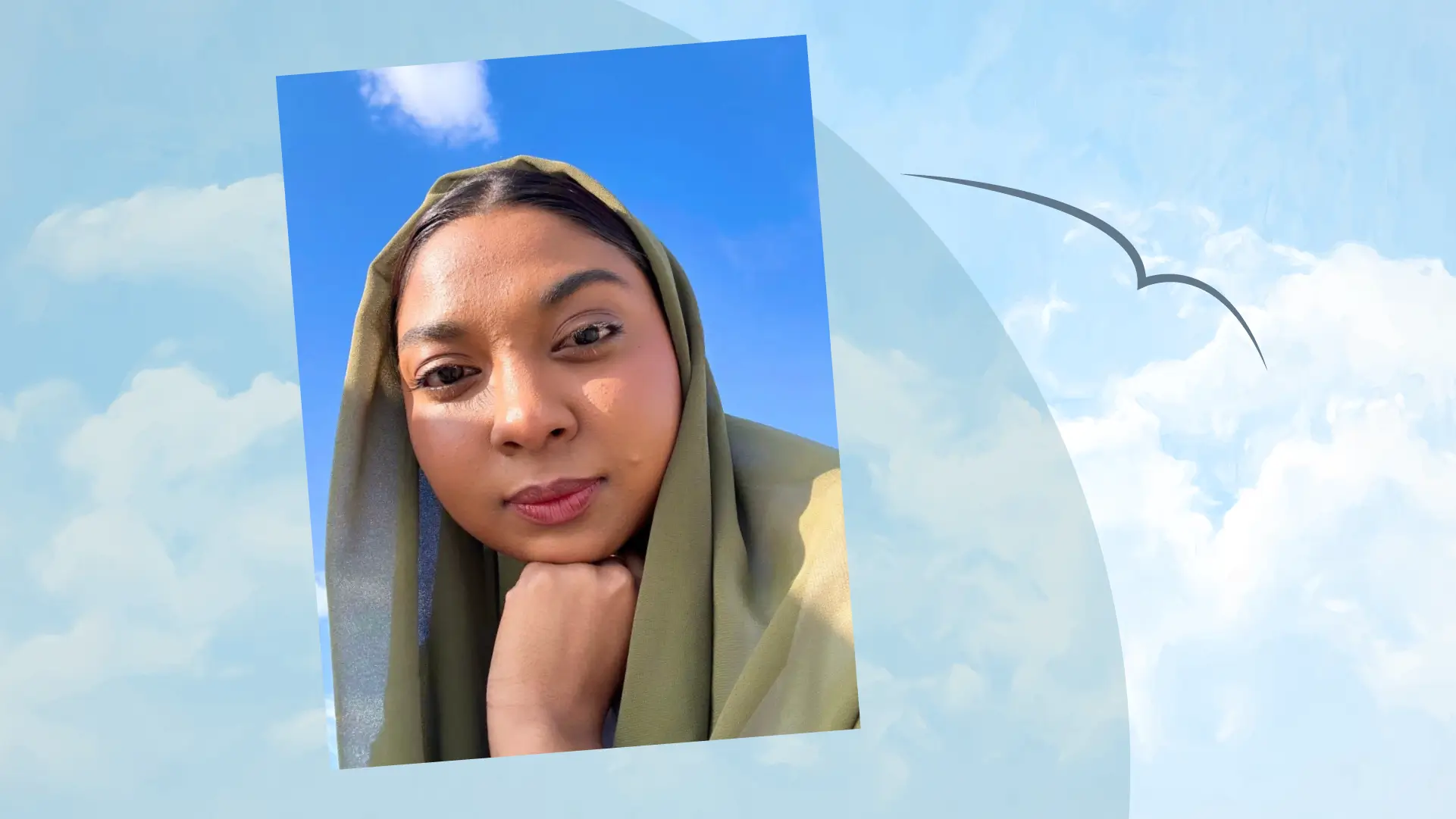
“Beyond feeling held together in such care-ful support and respect, I just want to say that I’ve (never) experienced a walk where there was such a combination of respectful listening and spirited solidarity. It’s what we hoped for … that strange space of possibility lying somewhere between grief and joy. ”
—Carla Lever, a member of Women Walk at Midnight SA’s organising committee
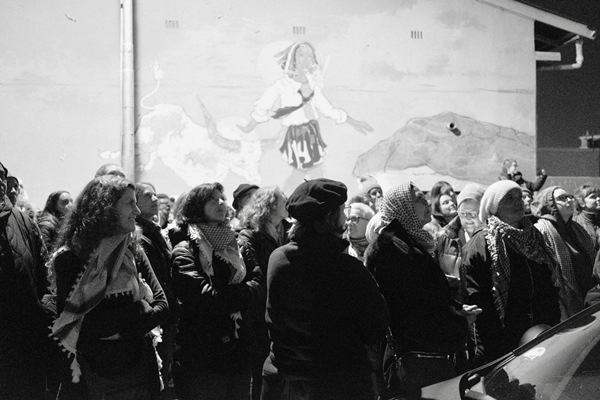

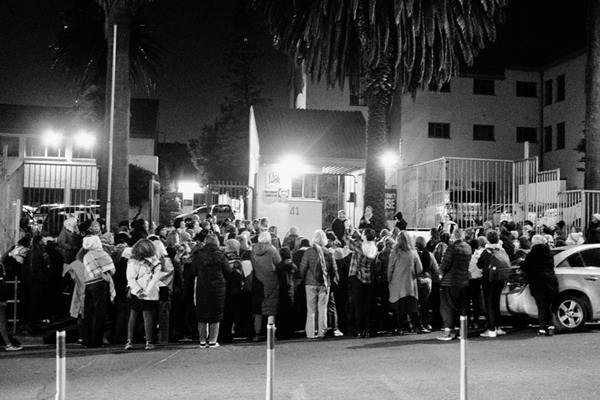



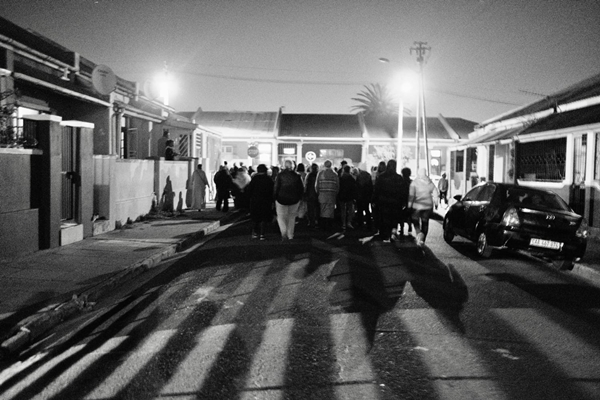

Photo credits: Mishra Sonday
On a bitterly cold Wednesday night in August, hundreds of women from a variety of backgrounds braved the night streets of Salt River, to mark Women’s Month in South Africa. Finding warmth and comfort in the camaraderie of sisterhood, they stamped their rights to freedom in this working class suburb on the outskirts of the centre of Cape Town, one of the most unequal, violent capitals of the world. And chose the occasion to honour the women of Palestine, who, along with their children, are bearing the brunt of an unspeakable genocide by Israeli occupiers.
Professor Amrita Pande, who spearheads the South African chapter of Women Walk at Midnight, organisers of the walk, described the women’s walking as a “radical” act on a “night where even winter forgot itself”.

Video credit: Nazley Khan
With its genesis in Delhi, India in 2016, Women Walk at Midnight South Africa began in 2022 as “a very simple and yet, critical initiative, especially in a country like South Africa, commonly referred to as the rape capital of the world,… It is about building a community, a space of safety for women, where we can walk, sing, talk, breathe…. exist and access the night without fear. We walk together because we have never been able to walk alone without a sense of fear, without holding on to whatever we feel will protect us from the predator lurking around, and without our hearts beating in our mouths. Together we reclaim the night, and we reclaim the streets of our city. There are no formal mechanisms of safety and no police protection. Women walking together are each other’s safety.“
Here we share videos of stops along the Women Walking at Midnight route on 13 August 2025.

Video credit: Nazley Khan
Salt River heritage: The fight against gentrification
The walk traced the Salt River murals route, introduced by Kulsum Viljoen, a testimony to the community’s long-held solidarity with Palestine.
The Salt River murals route is a testimony to the community’s long-held solidarity with Palestine. It is a product of the Salt River Heritage Society (SRHS), founded in 2018, “to conserve and collate the Salt River people’s history”. Kulsum Viljoen, SRHS treasurer, introduced Women Walking at Midnight to the stories behind the murals of Salt River.

Video credit: Nazley Khan
Housing cooperative resisting Cape Town gentrification
This was followed by a stop Cissie Gool House (CGH) where Karen Hendricks spoke of the occupation which is resisting the City of Cape Town’s marginalistion of working class families.
Cissie Gool House (CGH) is a former hospital in Woodstock which now houses a community of around 1,000 people. This housing cooperative is organised by Reclaim the City, a collective of housing rights organisations and cooperatives, which establishes occupations of abandoned buildings. Their work is a symbol of resistance and visible struggle against the gentrification of the City of Cape Town, which has a long history of expelling working-class people from the city centre to far-flung areas.

Video credit: Nazley Khan
Community House
Community House in Salt River, Cape Town, is ”a unique and historic site of living heritage”. It has been a site of activism, especially in the turbulent times of resistance to the apartheid government in the mid to late ‘80s. Community House remains a centre of socio-political engagement, home to NGOs, Trade Unions, a labour and community history museum, and 24 organisations “that focus on labour research, popular education, gender advocacy, HIV/AIDS education, environmental issues, youth development and media production”. But it also provides the broader community with affordable Halls for hire.
Poet Imān Zanele Omar shares a historical account of Community House.
This piece was written for the August 2025 edition of Postscripts, Shamillah Wilson’s monthly round-up of what’s been happening in feminist circles, her work, and some recommended reading suggestions.