We are living in a time of deep disquiet. Global wars and tyranny. Exile and displacement. Inequality and poverty. Food insecurity. Environmental Crisis. Governments that don’t listen. Corruption. Violence. Stories of these issues are shared publicly and on social media, and these dynamics are at the heart of debates both within and across nation-states.
However, in South Africa, we carry an additional burden that we often fail to acknowledge. It manifests as: Helplessness. Disillusion. Community fragmentation. Violence. Family and relational distress. Compromised mental and physical wellness. Depression. Anxiety. Addiction. Exhaustion.
There is a profound heaviness that lingers beneath the surface of daily life. Often, we behave as if this distress is a pathology belonging to individuals who need to be managed, treated, or helped. However, much of what we are experiencing is shaped by something larger, and it is our shared, collective burden. It is shaped by our history of racial oppression and the ongoing realities of race and economic inequality. It has a name – Racial Trauma. It is something our nation lives with, and it lives inside each of us.
This cannot be separated from our enduring legacy of slavery, colonialism and apartheid, and the generational struggles, suffering and pain it has caused. What we are experiencing is a collective damaging distress. It is not merely personal. It is often unrecognised. And it is unevenly distributed.
In my work, I sit with individuals and teams who are trying to make sense of what they feel and the effects of racism. What becomes clear, again and again, is that people are not only overwhelmed by the demands of work. They are navigating environments shaped by unspoken histories, unresolved tensions and forms of harm that are not always recognised.
In these spaces, people adapt. They work harder to prove themselves. They stay silent in moments that matter. They carefully regulate their emotions, containing what cannot be safely expressed. They endure. These responses allow people to function, to survive, and sometimes even to succeed. But they come at a cost – exhaustion, disconnection, and a sense of fragmentation – a feeling of not being able to fully inhabit oneself. All this drains us of our true and full potential as human beings.
When we begin to see racial and psychosocial distress in this way, we see that it is not limited to direct experiences of overt discrimination. It is transmitted generationally, is repetitive and cumulative, and is often indirect. It is carried not only through personal encounters but also through witnessing, through memory, and through the broader social environment.
If the wound is collective, then healing cannot be individual alone.
Healing asks something of all of us. We have a responsibility not to turn away. We have a responsibility to name our experiences, to witness and name the racialised experiences of others. This is our first act of healing and our first act of disrupting a cycle of limitations placed on being fully human.
We have yet to agree on what this healing looks like or entails, but in our hearts, we hold wisdom. We know that people need to come together, to speak, to be listened to, and to find meaning in their experiences in connection with each other. The remedy for the distress and struggles we face is to reconnect – with our bodies, with one another, with history and with place.
For many, this is an extra burden they would rather ignore as they struggle to survive and thrive in an alienating world. If we turn away, we risk continuing cycles of oppression. We also risk passing on the distress we feel to future generations. The very limitations we feel are unconsciously passed down to them, shaping their lives in restricting ways.
Healing asks something of all of us. Healing lies in what we have done for ourselves for centuries, anyway, but may have suppressed. We must pay attention to what we are carrying, to notice what remains unspoken, and find ways of being in honest, complex and caring conversation with one another. We are all capable of dialogue, storytelling, rituals, drawing on cultural and spiritual traditions, supporting one another and taking collective action. We know these ways of responding to suffering, resisting oppression and working towards restoration.
For those of us who are organisational practitioners, racial healing asks us to reflect on the limitations of our models, to consider whose knowledge counts in the spaces we create, and to recognise how we unconsciously support systems of oppression. It urges organisations to move beyond superficial commitments towards transformation and addressing the deeper relational and structural dynamics shaping people’s experiences.
As we continue to respond to the legacy of psychosocial distress in our society, we are being invited to expand how we understand healing. Healing is not something that happens only in consulting rooms or in individual one-on-one therapeutic work. It is built in communities and in relationships. Perhaps the question is not only how we heal. But how do we begin to create the conditions where healing becomes possible?
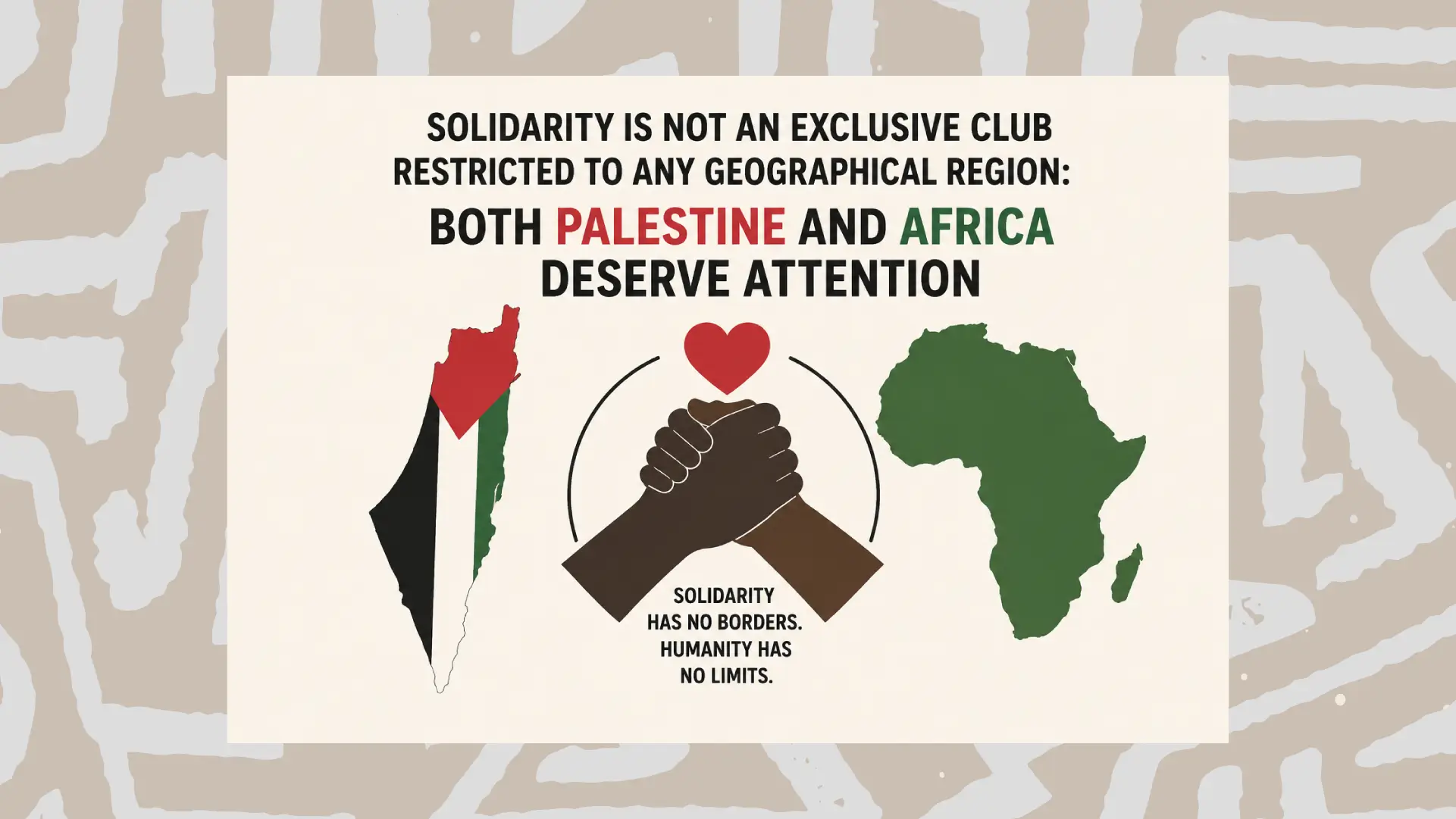
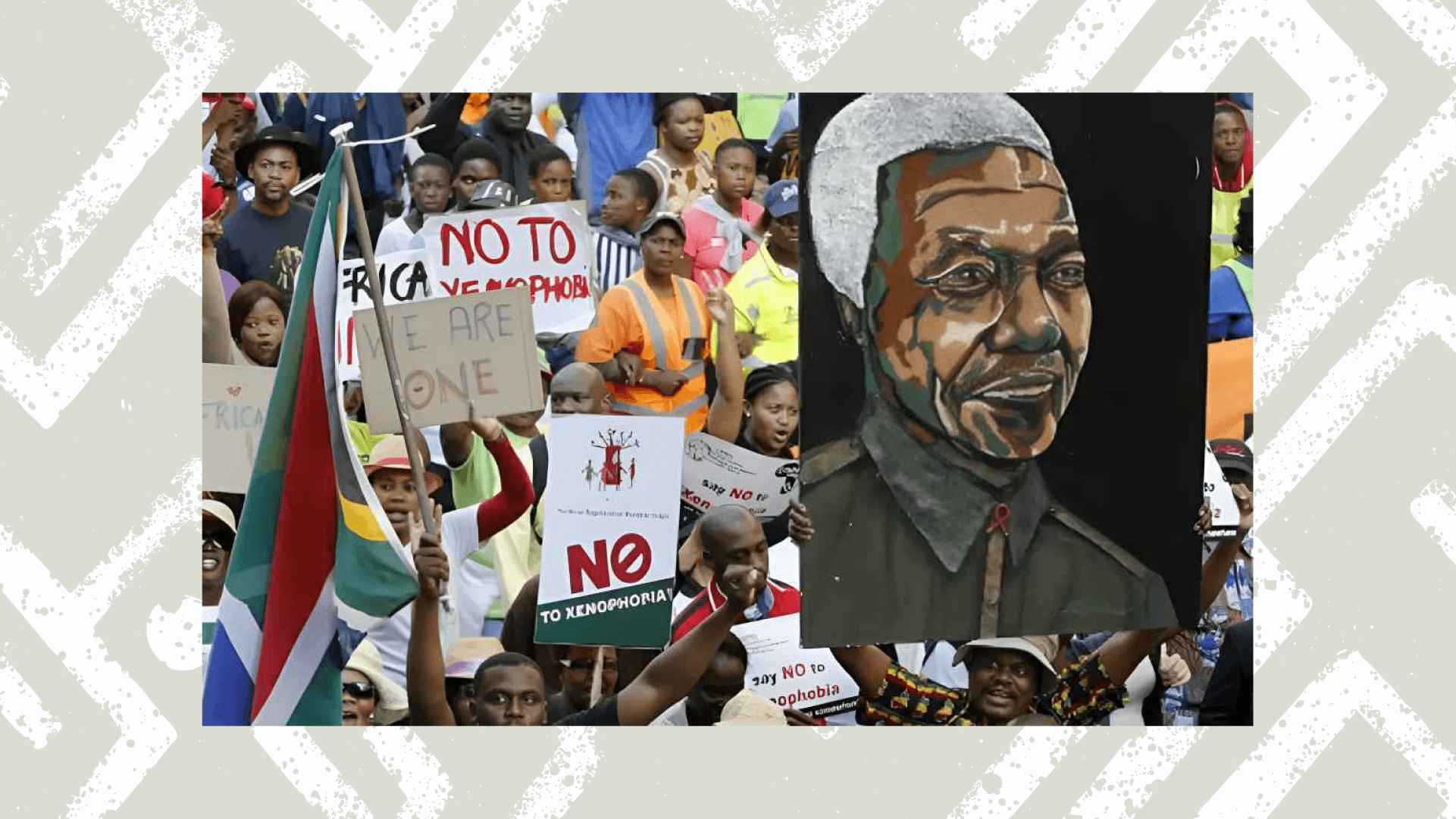
Our salvation lies in our solidarity and our willingness to recognise the systems that continue to cause harm – and to act on them. This is where the work becomes both personal and collective.
This piece was written for the April 2026 edition of Postscripts, Shamillah Wilson’s monthly round-up of what’s been happening in feminist circles, her work, and some recommended reading suggestions.