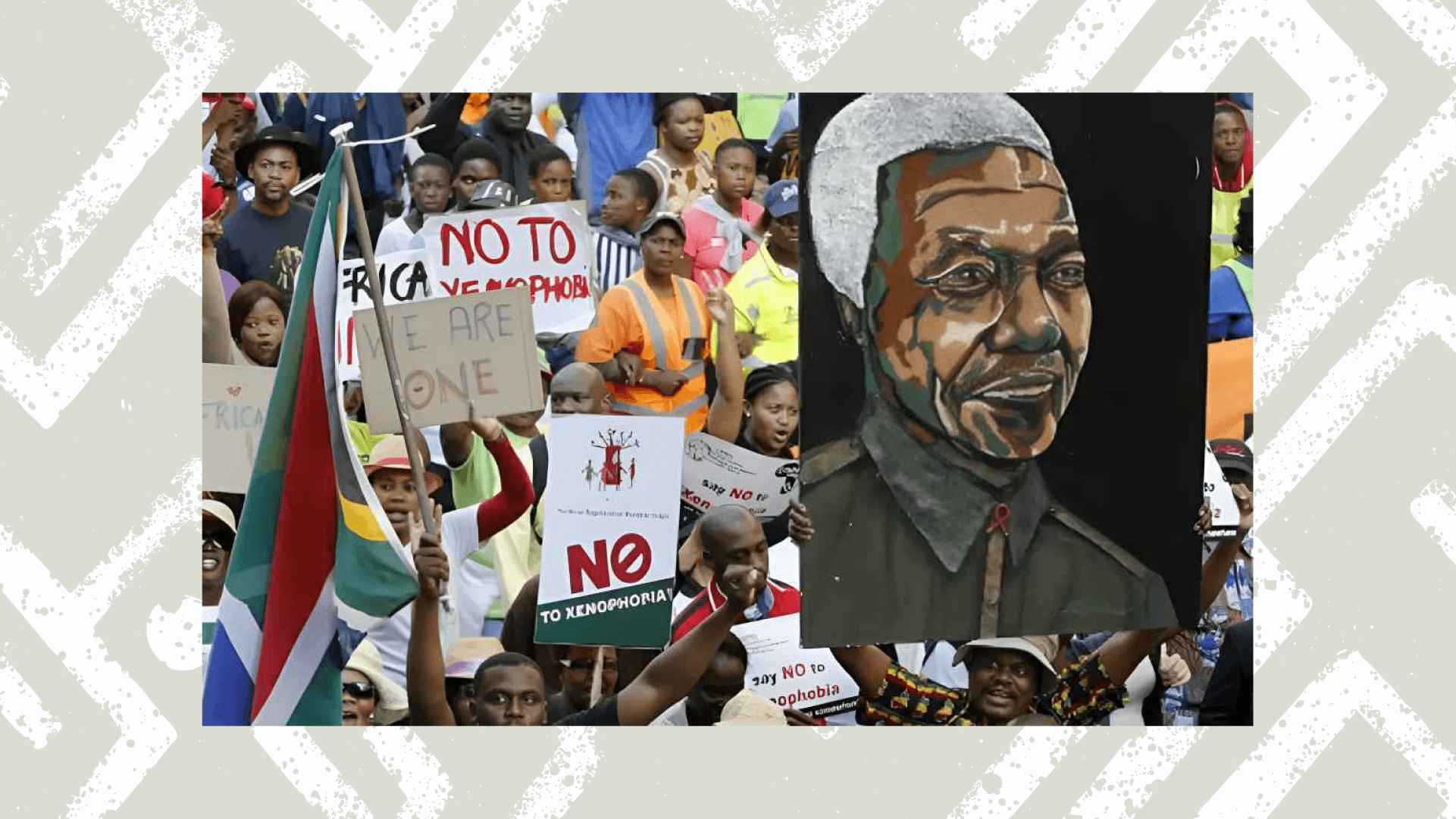
Since late December 2025, Iran has witnessed widespread protests driven by deep economic pain and long-standing political repression. Spiralling inflation, the collapse of the rial, unemployment and rising food and fuel prices have pushed ordinary Iranians to breaking point. What began as economic protests quickly broadened into demands for dignity, accountability, and basic freedoms, echoing earlier cycles of unrest but with renewed intensity.
Human rights organisations, including Amnesty International and UN mechanisms, have documented lethal crackdowns by Iranian security forces. These include the use of live ammunition, mass arrests, enforced disappearances, and sweeping internet shutdowns designed to isolate protesters and suppress documentation. Thousands are believed to have been killed, although precise numbers remain contested due to state censorship and restricted access for independent observers.
How protests became politicised
While the protests are rooted in genuine domestic grievances, they have become entangled in a wider geopolitical struggle. Iranian authorities insist that foreign intelligence services are exploiting unrest to destabilise the country. These claims are routinely used to delegitimise popular dissent and justify repression.
What complicates the picture is that Israel has publicly acknowledged covert operations against Iran in other domains, including cyberwarfare and targeted assassinations, and Israeli media have openly discussed Mossad activity aimed at weakening the Iranian state.
US Pressure and the Spectre of War
As unrest has intensified, the United States has escalated its rhetoric and military posture. Washington continues to frame Iran as a regional destabiliser and has signalled readiness to use force under certain conditions. Naval deployments, sanctions enforcement and public warnings have fuelled fears of a broader military confrontation.
US officials insist that their posture is defensive and aimed at deterrence. However, the history of American interventions in the region has made such assurances ring hollow for many observers, particularly in the Global South, where regime change narratives are familiar and costly.
The petrodollar beneath the politics
Beyond human rights and security arguments lies a deeper structural concern: the petrodollar system. Since the 1970s, global oil trade has largely been conducted in US dollars, creating persistent demand for the currency and anchoring American financial power. This system allows the US to sustain deficits, keep borrowing costs low, and wield extraordinary influence over global finance.
Iran has long posed a challenge to this order. It has repeatedly threatened to sell oil in non-dollar currencies, including the euro, and has experimented with alternative trading mechanisms to bypass dollar-denominated systems. Such moves, while limited in scale, represent a symbolic and practical challenge to dollar hegemony.
Reuters and other outlets note that US sanctions are deeply intertwined with this financial architecture. By controlling access to dollar-based systems, Washington can effectively isolate adversaries like Iran from global markets, exacerbating economic hardship and exerting political pressure without firing a shot.
Sanctions, suffering and strategic leverage
Sanctions have devastated Iran’s economy, constraining oil exports, slashing state revenue, and worsening everyday life for civilians. While framed as tools to change elite behaviour, they often deepen popular suffering and feed the very instability they claim to address.
Critics argue that sanctions function as a form of financial warfare, leveraging the petrodollar to enforce compliance while avoiding overt military action. In this context, Iran’s resistance to dollar dominance is not merely ideological but existential.
Beyond simplistic narratives
Reducing Iran’s crisis to either foreign interference or petrodollar conspiracy would be misleading. The protests are real, the grievances legitimate, and the repression brutal. At the same time, global power politics shape how those protests are interpreted, instrumentalised, and responded to by external actors.
The danger lies in allowing geopolitical interests to eclipse Iranian voices. Any path forward must centre the demands of ordinary Iranians while acknowledging the structural forces, including energy markets and financial systems, that continue to influence US-Iran relations.
In Iran today, economic despair, political repression and global power struggles converge. The outcome will shape not only Iran’s future, but the evolving balance of power in a world increasingly questioning who controls its resources, its currencies, and its narratives.
References
- UN Human Rights Council emergency session on Iran protests
Reuters: UN rights body holds emergency session on Iran’s protest crackdown
https://www.reuters.com/world/middle-east/un-rights-body-holds-emergency-session-irans-protest-crackdown-2026-01-23/ - Protests escalation and US naval deployment
The Guardian: Trump says US ‘armada’ heading to Middle East as Iran death toll put above 5,000
https://www.theguardian.com/world/2026/jan/23/trump-says-us-armada-heading-middle-east-iran-death-toll - Verified deaths and internet restrictions
AP News: US-based activist agency says it has verified 3,919 deaths from Iran protests
https://apnews.com/article/95207b62fb2c8a4f3745d981ea0f9849 - Protests spread, economics, internet blackout
Encyclopaedia Britannica: 2026 Iranian Protests
https://www.britannica.com/event/2026-Iranian-Protests - Background on national internet shutdown in the context of protests
Wikipedia – Internet censorship in Iran: 2026 blackout data
https://en.wikipedia.org/wiki/Internet_censorship_in_Iran - Early Reuters coverage of protest deaths and inflation context
Reuters – rights groups say at least 25 dead
https://www.reuters.com/world/middle-east/rights-groups-say-least-25-dead-iran-protests-2026-01-06/ - Petrodollar system and its influence on global economics
Investopedia: Petrodollars and Their Impact on the U.S. Dollar and Global Economy
https://www.investopedia.com/articles/forex/072915/how-petrodollars-affect-us-dollar.asp - Iran sought euro payments in oil transactions (historical)
Reuters (2016): Iran wants euro payment for new and outstanding oil sales
https://www.reuters.com/article/markets/currencies/exclusive-iran-wants-euro-payment-for-new-and-outstanding-oil-sales-source-idUSKCN0VE21R/ - U.S. leverage over oil dollars and pressure on Iraq to limit Iranian influence
Reuters: U.S., in control of oil dollars, heaps pressure on Iraq over Iranian influence
https://www.reuters.com/world/us/us-control-oil-dollars-heaps-pressure-iraq-over-iranian-influence-2026-01-23/ - Reuters analysis on broader oil price volatility from Iran crisis
Reuters – Breakingviews: Iran crisis gives oil an even starker swing factor
https://www.reuters.com/commentary/breakingviews/iran-crisis-gives-oil-an-even-starker-swing-factor-2026-01-09/ - Historical analysis of the petrodollar and challenges
ResearchGate – The Iranian Oil Bourse and the dollar dominance debate
https://www.researchgate.net/publication/5170671_The_Iranian_Oil_Bourse_A_Threat_to_Dollar_Supremacy - Congress research on sanctions impact on oil markets
U.S. Congress CRS Report on oil market effects of US sanctions
https://www.congress.gov/crs-product/R46213
This piece was written for the January 2026 edition of Postscripts, Shamillah Wilson’s monthly round-up of what’s been happening in feminist circles, her work, and some recommended reading suggestions.