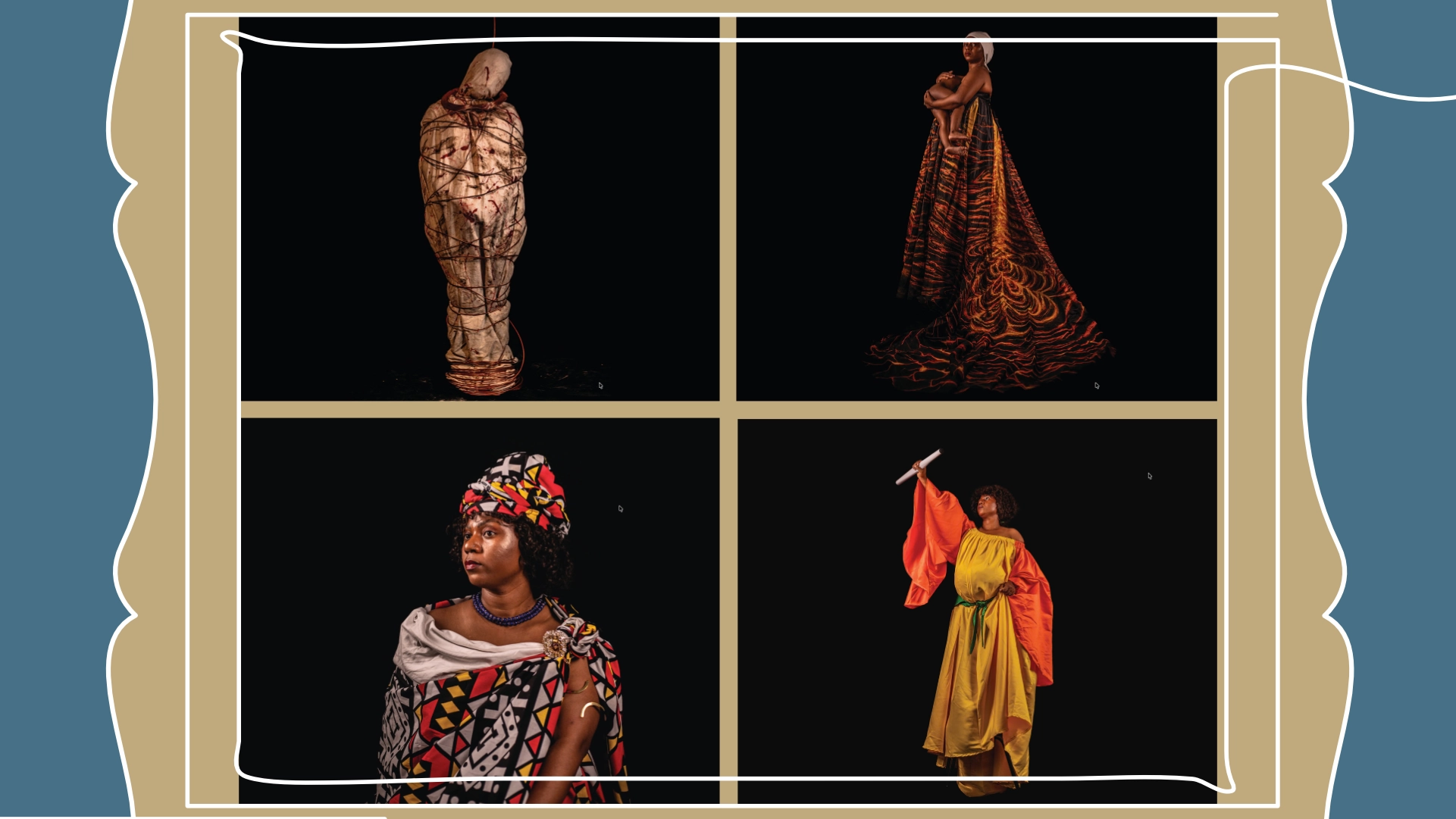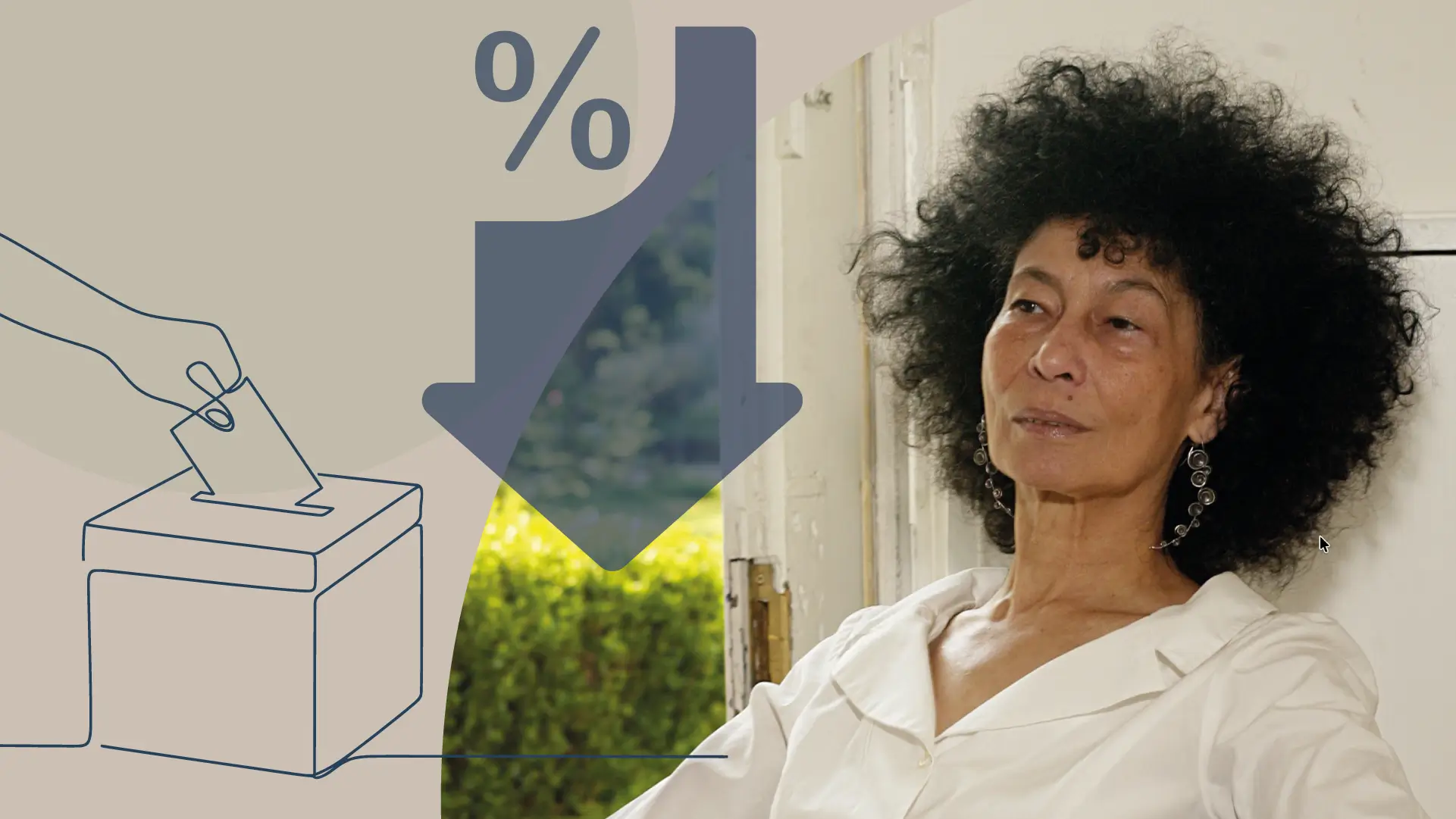
Zoë Wicomb at her home in Glasgow, Scotland, in 2006. Photograph: Alex Hewitt/Writer Pictures
South Africans are confronting the aftermath of the 4 November 2026 local government elections, in which the majority of those who voted chose right-wing parties, replicating the global swing towards fascism. As identity politics risks becoming entrenched, I turn to this insight from the late writer, Zoë Wicomb.
‘… Identity politics is the inevitable outcome of both historical apartheid and the resistance movement. Some conditions of the past may be changing, but sedimentation has taken place and it can’t be sluiced away when so many historical inequities remain in place. The following may be a crude simplification and there are indeed examples of contrary positions, but one can’t help registering certain trends. Black nationalism then, a requisite for a liberation movement, digs in its heels and finds new forms of assertion in toxic xenophobia; coloureds select their Khoesan roots, deny miscegenation as well as historical genocide, and take to their bow and arrows; whites deny their privilege, and speak of “reverse apartheid” to refer to bias against them. Bias there may be, but it so happens that we don’t have homelands for whites; they do not by law earn less than blacks; they do not have separate, inferior amenities, nor are they barred from voting or from criticizing the government; they are not subjected to a range of indignities and restrictions; indeed, the country’s wealth is kept safely in their hands, in spite of cries about black corruption. What then, one might ask, do they think apartheid was about? (I have recently written to the Collins English Dictionary to object to their absurd entry of “reverse apartheid”). Antjie Krog’s questioning of entrenched attitudes within her own group is routinely met by sighs and shaking of sophisticated heads, weary of such carping. Not only are we stuck in [Ashraf] Jamal’s “divisive logic of cultural solidarity and difference established by apartheid”, there are also strange new manifestations. What does one make, for instance, of the new spelling of place names in the Western Cape, where the once preferred Afrikaans vowel “y” has been replaced by the Dutch vowel “ij”?
Attitudes towards race may well be changing amongst the younger generation, but the economic reality prevents that from making a difference. I’m hard pressed to think of any uses for identity politics in South Africa where there are so many different vying constituencies. In countries like Britain where black people are a minority, identity politics serves to insist on their presence and to lobby for legislative change. I’m not sure what it achieves in South Africa with its ANC government where it manifestly does not and perhaps cannot lead to the levelling of social inequities.’ (In interview with , Tydskrif vir Letterkunde, Vol 58, No 2, 2021)
Thanks to Sean Jacobs for his post reminding us of Zoë Wicomb’s reflections on identity politics.
What does this turn to the right mean for progressives? While many are bemoaning the choices of voters, it must be noted that voter turnout is once again a significant factor in election wins. Up from 2021’s 45.86% of registered voters voting, at 52% of registered voters, the majority (over two-thirds) of eligible South African voters did not vote. That means that while 15.9 million of 44.9 million eligible voters turned up to the ballot box, 29 million chose not to make their mark.
The decisive political effect was not simply who voted, but where turnout was strongest. Suburban wards mobilised at far higher rates than many township wards, while rural participation remains less clearly quantified in the available national reporting.
The turnout baseline
The Electoral Commission declared that 29.2 million people were registered and approximately 14.9 million voted, producing a 52% registered-voter turnout; up 6.1 percentage points from 45.9% in 2021. Using Ipsos’s estimate of 44.9 million eligible voters, turnout among all eligible adults was about 35.4%; roughly 29 million eligible South Africans did not vote.

Urban geography mattered
The clearest spatial pattern comes from Gauteng: suburban wards turned out at much higher levels than township wards. In Tshwane’s eastern suburbs, Ward 85 reached 73.31% turnout, while Ward 24 (covering parts of Soweto and surrounding areas) recorded 44%.
Soweto wards averaged about 50%, up from 40% in 2021, whereas Johannesburg’s northern suburbs averaged above 60% and Centurion/Pretoria East reached about 70%. This means the 52% national figure conceals a substantial class-and-space divide: affluent, property-owning suburbs were much more likely to convert registration into a ballot than township communities.
How it shaped outcomes
Higher suburban turnout disproportionately strengthened parties with established suburban bases, especially the DA; the available analysis explicitly notes that high-turnout wards were often DA strongholds, while lower township turnout depressed ANC vote shares. The ANC still led on 30.89%, followed by the DA on 24.60%, MK on 9.61%, the EFF on 6.25% and ActionSA on 5.68%.
The result was a fragmented council landscape: 72 municipalities had an outright majority party, while 127 were hung. (As I write this, coalition negotiations are ongoing. With the election results gazetted on 13 November, municipalities are required to constitute their councils by 27 November.)
What progressives should read
The strategic implication is twofold: rebuild participation in township and rural communities where abstention is concentrated, while offering a credible local-government alternative to voters who shifted toward DA, ActionSA, MK and other challengers. The IEC itself framed local government as the most immediate interface between citizens and the state (roads, water, employment and dignity) making service delivery, not only national ideology, central to future electoral contests.
South African democracy, governance and policy expert and community mobiliser, Tessa Dooms’s argument is that registration drives and election-day mobilisation are necessary but insufficient: they can bring people to a march or a polling station, but they do not necessarily build durable citizen power. Organising, by contrast, means creating sustained local structures – relationships, civic education, collective problem-solving and accountability mechanisms – that continue between elections.
For progressives, this means treating wards, township forums, rural communities, workplaces, youth structures and resident associations as sites of political education and practical organising, not merely as campaign targets every five years. Dooms argues that such organised communities can select or support candidates who reflect local priorities, continue civic education, and hold elected representatives accountable after the vote. Her broader point is that communities are not apathetic: they are often already building responses to unemployment, food insecurity, crime and failing services; the task is to connect and strengthen those initiatives into collective political power.gov+1
Community manifestos
Community manifestos offer a concrete organising tool. Rather than accepting a party manifesto as the agenda, residents collectively identify ward priorities like water, sanitation, refuse collection, roads, housing, electricity and safety, and ask candidates to make public, written commitments to them.
These documents can also set reporting deadlines, create recall or accountability clauses, and turn a local constituency into a negotiating bloc. In the 2026 election, grassroots groups used community manifestos to ask candidates directly whether they would commit to residents’ terms; some linked that commitment to a coordinated community vote. For progressives, the lesson is clear: win elections not by simply asking people to vote against the right, but by helping communities define, publicise and enforce their own programme for local dignity, services and accountability.